Foreword
It all started when my grandparents died. Suddenly there was no one left I could ask about the old days. So I started searching myself.
Later a second trail was added: an old house. Anyone who buys or inherits a house wonders at some point who used to live there. For me it was an old coin that I found in the house. A small find – but I couldn't stop thinking about it. Who lost it? Who lived here, worked here, raised children here?
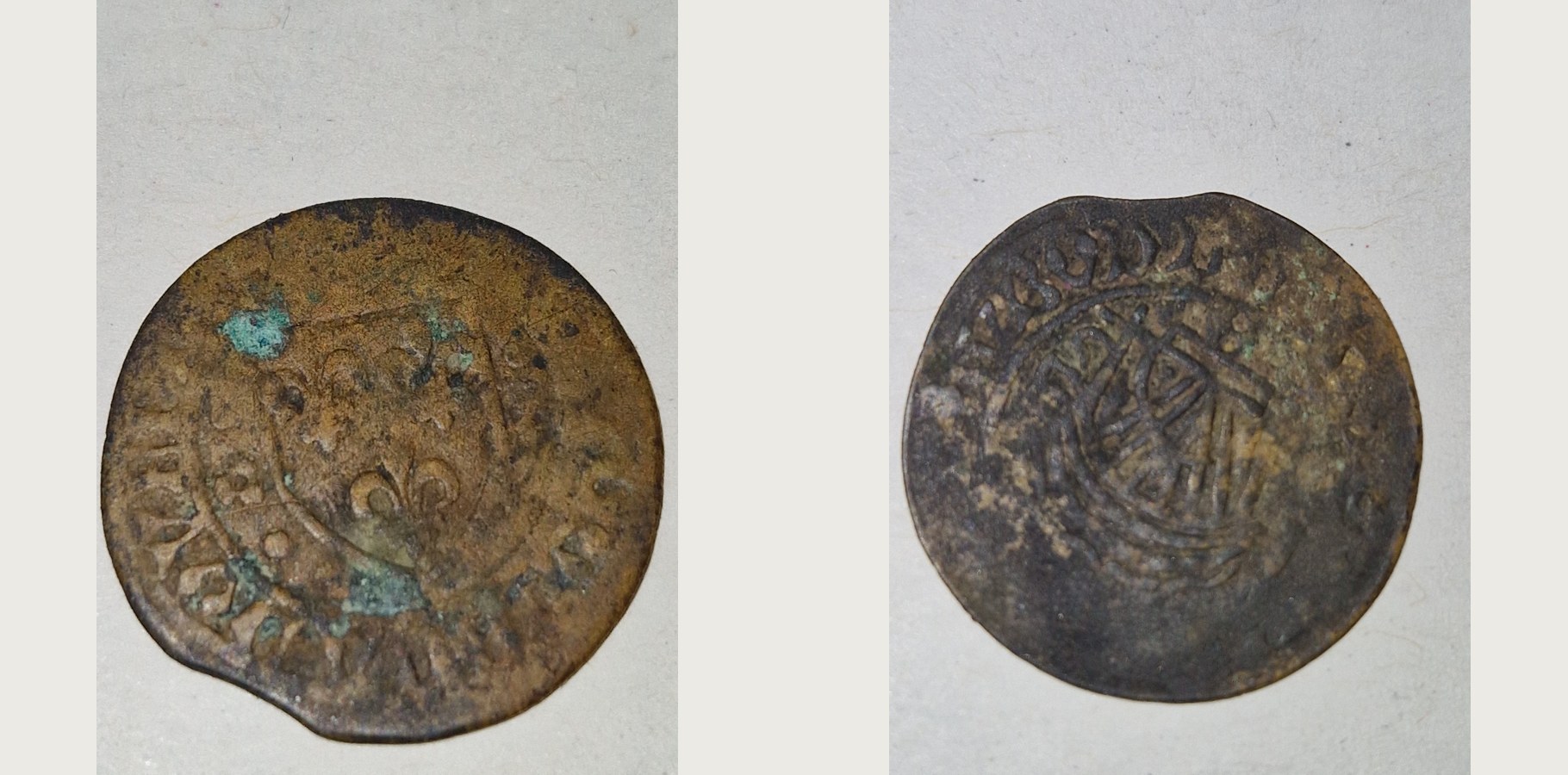
Along the way I learned that a house is one of the best guides to people. Through the house number you find not only the owners but also tenants, maids, grandparents living in retirement on the farm (im Austrag), and the neighbors. That is why this guide has two equally important parts: one about the people and one about the houses and farmsteads they lived in.
Over time I also learned to read an old house myself – much as you can read a tree's history in its narrow and wide growth rings. There is an old beam with strange notches that evidently came from another building and was given a second life here. There are blackened stones and beams that reveal where a large hearth with a smoke chamber (schwarze Kammer) once stood. There are small rectangular windows that don't quite fit the rounded lintels and the much larger openings. And sometimes an old window even turns up behind a wall, one that has long since stopped being visible from the street. If you know what to look for, you find a house's history not only in archives but also in its walls.
The first big hurdle came quickly: old handwriting. Nothing cost me as much time in the beginning as entries I could barely decipher. The second: patience. A purchase contract is not a construction date, and a construction date that appears somewhere in the records often doesn't deliver what it promises. More than once I had to strike an assumption. That's part of it – what matters is to document every statement and to correct mistakes openly. And the further back you go, the harder it gets: before 1800 the traces lie in many different archives, and the books are harder to read. If that's how you feel right now – you're in good company.
I made progress above all thanks to free resources: libraries and archives that put their holdings online free of charge, and software that is freely available. I have benefited a great deal from them. That is why the core text of this guide is freely accessible. I want to give something back to the community.
I owe just as much to the people in offices and archives who patiently answered my questions – if you ask well, you often get more help than you expect. And to the many volunteers: the helpers in parishes, the societies, and all the volunteers who transcribe parish registers (Kirchenbücher), compile house books (Häuserbücher), or create local family books (Ortsfamilienbücher). Without their work, many finds would not exist. My heartfelt thanks to all of them.
In the past year, artificial intelligence has made a big leap. That is leading to breakthroughs everywhere – including in family and house history research. AI helps me, for example, with reading old handwriting, and it also worked on this guide (see the preliminary note). One rule applies without exception: every fact is checked against the original. The AI makes suggestions; the responsibility remains with me.
This guide tells neither the story of my family nor that of my house. It shows the paths I have taken. Where I can contribute something from my own experience, you will find a box “From experience (Aus der Praxis)”. In the part about houses and farmsteads, the boxes “Typical case (Typischer Fall)” show general patterns; their figures and details are entirely made up and do not describe any particular house.
I hope that you get a little further with your family tree – and perhaps with the history of your house. And perhaps you will manage to inspire others to take up this work.
My most important advice fits into one sentence: Keep at it, and don't give up.
OpenCRAM
Preliminary Note and Legal Notices
Free and non-commercial. A free, non-commercial offering by a private individual – no advertising, no sales, no paid recommendations.
This guide is meant to make it easier for you to find your way to your Franconian ancestors – and to the history of the houses and farmsteads they lived in. So that you know what you can expect, here are a few notes up front.
Personal view, not advice. This guide reflects the personal view and experiences of a hobby researcher: an account of experience and a source of orientation, not a set of instructions. It does not replace legal, tax, or any other advice and does not provide legal services. Where the guide explains laws, closure periods (Schutzfristen), or fees, this is for general orientation; no individual case is examined. For specific questions, for example about an inheritance or a denied request to inspect records, contact the responsible office or an attorney. What you make of the suggestions is your own decision and responsibility.
Care, but no guarantee. All information has been carefully researched and documented with sources. Nevertheless, no guarantee can be given for its accuracy, completeness, or currency. Information is current as of November 2, 2026, unless otherwise stated for a given item. Fees, opening hours, and rules change, and online holdings grow. Therefore, check fees, deadlines, addresses, and conditions with the responsible office before making an inquiry or a trip.
Liability. No liability is accepted for damages arising from the use of this guide, to the extent permitted by law. This does not affect liability for intent and gross negligence, for damages resulting from injury to life, body, or health, and under mandatory statutory provisions.
Third-party services, links, and trademarks. The linked archives, portals, software, and services are independent of this guide; their providers alone are responsible for their content, prices, and conditions. We do not adopt linked content as our own; no legal violations were apparent when the links were set. If you notice a faulty or unlawful link, write to us – we will check it and remove it promptly if necessary. Names of portals, software, and companies serve only as descriptions and may be trademarks of their owners. There are no paid recommendations and no connection to the providers mentioned.
How this guide came about. First rough drafts of the chapters were produced by an AI language model (Claude by Anthropic). The factual statements were checked against the cited sources by separate, likewise AI-assisted review roles; some statements rely on secondary sources. The publisher reviewed the foreword in detail and the remaining texts in overview, and is responsible for the selection and assessments; the foreword and the “From experience (Aus der Praxis)” boxes are based on his own experience in family research. The “Typical case (Typischer Fall)” boxes were written by the AI from general patterns. The photo in the foreword was taken by the publisher; it was composited with an AI tool. Editorial responsibility lies with Christian Reichel. More about this under License.
Who is behind OpenCRAM? A private family researcher. He publishes this guide as a non-commercial project and is responsible for its content; his name and address are given in the Impressum (legal notice). Questions and tips reach him at ahnen@opencram.org.
Free version. You are reading the free version. It is licensed under CC BY-SA 4.0: you may share and adapt it with attribution, including commercially; adaptations must be shared under the same license. Details under License.
Protecting living people. The EU General Data Protection Regulation (Datenschutz-Grundverordnung, GDPR) does not apply to deceased persons; the archives' closure periods and the feelings of relatives nevertheless deserve consideration. Information about living people, such as dates of birth, addresses, or photos, on the other hand, is protected. Before you publish or share your family tree, leave out living people or ask them for permission.
Researching houses – consideration for today's owners. Anyone researching the history of a house touches on the rights of the people who live in it today. As a rule, you can inspect the land register (Grundbuch) and building files (Bauakten) of someone else's house only with a letter of authorization (Vollmacht) from the owners; you enter properties only with permission, and you photograph houses only from the street. The “Typical case (Typischer Fall)” boxes describe general patterns; their figures and details are made up. The legal information refers to Bavaria (law as of November 2026).
Feedback. Have you found a mistake or outdated information? Write to ahnen@opencram.org. Individual case consultations are, however, not possible through this channel.